Powerboat Racing - Extreme Watersport

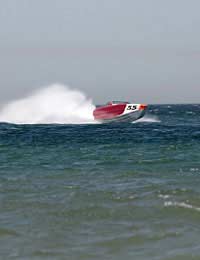
Powerboat racing is an extreme watersport that is not for the faint-hearted. Its high risk factor has meant it has evolved into a very high-tech sport with great concern for the racer’s safety.
What is Powerboating?
Powerboat racing is an extreme watersport whereby very high-powered vessels are raced at high speeds. There are two main types of powerboat racing – circuit and offshore. Essentially, circuit racing takes places on closed and protected inland lakes and rivers, whilst offshore racing takes place on open coastal waters.Within these disciplines there are race classes for craft within a variety of specific guidelines – such as the litre engine classes and the RIB classes - and there is one-design racing where only one specific type of vessel is allowed to compete.
How Safe is Powerboat Racing?
Powerboat racing is an ‘extreme sport’, so it is not only extremely exciting, but extremely dangerous too. Its heavy regulation and stringent safety rules mean that fatalities are relatively rare but boat crews still take an awesome pounding from the impact of crashing into the water at great speed. Injuries are fairly common, and typically include slipped discs and internal bleeding.Common Racing Dangers
- ‘Overcooking’ – this is when a boat goes too fast into a corner or turns in too sharply so that the boat rolls.
- ‘T-Bone’ – the name for when one boat jumps high out of the water and lands on top of another.
- ‘Hooking out’ – when a boat is not set up correctly for a corner and so it leans over so far that a crew member is lost, or the boat flips over.
Fitness
Racers need to be in good physical condition to be able to manage these powerful vessels. The pressures and vibrations they create can cause severe bruising, serious back injuries and, if anything goes awry, much worse. Many top powerboat racers prepare by running and weight training in order to build up their body strength, particularly their backs and necks.Master Basic Skills
The Royal Yachting Association (RYA) have devised two level of courses aimed at giving beginners key grounding in powerboating skills and techniques before they can hit the high speeds. These are taught at boating clubs and centres across the UK. The first level covers such subjects as boat handling, safety and rules and ropes and knots, whilst the second includes high speed handling as well as navigation, launch and recovery.For the more experienced powerboaters, there are training centres offering more specialised racing courses to refine their skills on the circuits. The Neil Holmes Power Boat Training Centre in Southampton, for example, offers a specialist race training course for high performance boat racers and includes such themes as tactical driving, understanding your race boat and cornering techniques.
Safe Race Entry
Before entering it is important to check whether the craft and occupants meet the basic safety and technical requirements for club racing as listed in RYA’s Offshore and Circuit Racing handbooks PB1 and PB2. These aspects will be carefully scrutinised by RYA officials before being allowed to race.For basic and club racing entrants will be required to purchase an RYA event licence. This can only be obtained upon completion of a medical and a short exam covering safety and racing rules. The club will then submit the application and fee cheque to the RYA, whereupon a provisional licence will be offered up until the holder can prove their responsibility helming a craft.
The Essential Basic Safety Rules
- Wear a lifejacket.
- Check your engine and fuel. Tell others where you are going.
- Carry some means of calling for help.
- Keep a keen eye on the weather and tides.
- Get proper training and boat within your limits.